I remember you mentioning that the Powder Cumulate were human, but hadn’t realized that the White Council weren’t Venge - I’ll change it to ‘The Venge’.
Q
Quint
@Quint
Posts
-
Intro 003 -
Intro 001lmk if the correction made it clearer
-
Intro 001in the first paragraph there is a reference to 18 years, but it makes very little sense, was it supped to be “eighty and ten”?
Arnaud is reflecting that he was personally involved in the construction for 18 years - he and Le Maçon worked on the Hall for 18 years, 8 of those prior to when Le Maçon became the lead foreman. I’ll try to edit it to make it clearer when I get a chance.
I wonder how I feel about having a French flavour for Amerele’s language
lol, oops on my part. Once you mentioned French geography and phenotype, I figured language naturally followed to, and can actually hear Gaspard’s accent (from the second story) in the back of my head when I read him. But feel free to change it to whatever.
Truth is, I’d kept on meaning to point out that you’d said with the elves that you didn’t want the language to be 1:1 Celtic. Just like there, for personal convenience I used actual French here, figuring that you’ll change things to customize the language. I guess maybe you’ll change the language all together. Either way.
I wonder if I’d change Le Maçon’s name/moniker.
-
Intro 003I remember you mentioning that the Powder Cumulate were human, but hadn’t realized that the White Council weren’t Venge - I’ll change it to ‘The Venge’.
I think I’d propose that perhaps he has some sort of low grade and constant Veil Sight?
Fine by me. I can try and rewrite to fit that setup better.
-
Reaction to The Mason introsAs sometimes happens with me, I’ve started having some ideas about where the story could go. A lot of times after I make a character, start writing a story, really even oftentimes reading someone else’s story and characters, I get some kind of a vision about what I think a good denouement would be. I’m debating if it’s better for me to share or not, bc I’m sure as the story goes on my view will evolve; it’s still very early days here.
What do you think @falconius ? Better to share or better to start seeing how things develop first?
-
Squeendom WIPsees location called
Silenehmmmmmmmmmmmmm
-
World Map WIP just for orientationvery kewl
-
Reaction to The Mason introsFrom my pov, the things that would help me write more would involve having some understanding of what the region is like (flora, fauna, local population, etc) and maybe a lead direction or small hook. I could make all that up myself, if need be.
-
Intro BioAgreed on the age, I’m fine with whatever you think on the mouth - you get portraits much better than I do.
-
Intro Biooh, I’d meant to attach this
-
Reaction to The Mason intros@Falconius Ardbeg is excellent. I am all for it being the official beverage of Le Maçon. (All whiskey should taste like there’s an entire hickory grill inside it, imho.)
Thanks a bunch for the kind words, I’m really happy it all landed!
We can always retcon in any other details that need working out - I’m more interested in the stories being directionally correct than the details being confirmed atm.
Feel free to move them wherever.
I think I’d opt for a GM round first, esp bc I don’t know much about the region.
-
Intro 003I just thought it sounded cool, I’m open to anything.
-
Intro 002I think I’d meant the memories - I edited both in.
-
Intro 001How about Prelate?
-
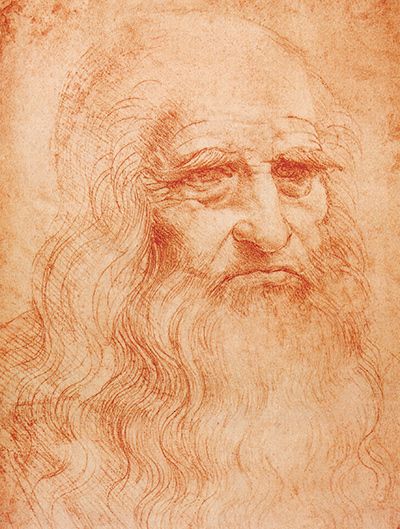
Intro BioI had also meant to mention that Da Vinci’s self portrait (Portrait of a Man in Red Chalk) is a reference for me for Le Maçon’s appearance. (Included at the bottom.) To me, Da Vinci looks a bit grumpy, whereas Le Maçon has a placid, neutral expression, and Da Vinci’s hair is long whereas Le Maçon’s would be kept short and neat, but the facial details and the beard are the same.
I did purposely leave Celine a bit open. I want to develop Le Maçon more first and see where the story goes. I have a nagging little thought in the back of my head that it could make for an interesting story if she herself was one of the original Spider Queens, but I’m not sold on that being the right path. She might also just be plain old dead, could come back as a Venge, could be some kind of other Magikar horror, could have joined the Magikar, there are really endless possibilities there.
I haven’t worked out what I’m calling The Rage yet. For me it’s more of a character device atm, but seeing how that develops is definitely going to be interesting too. In a larger sense, there’s a huge change in Le Maçon since he came back - he feels now. How will that change him? idk.
-
Note on Intro - Read Intro's in the Chapters Section Before BioI’d recommend reading the Intro stories (001-003) before reading the bio - I think the stories illustrate Le Maçon far better than the bio, and that the bio is better for reference.
Oh, and I play very fast and loose with canon here, and am happy to iterate to get things better in line, if needed.
-
Intro BioLe Maçon
Appearance
In life, Thibault Beaumont was a powerfully built man in his mid-fifties: broad-shouldered, large-handed, sun-darkened, with the accumulated strength of a lifetime of physical labor. Bald, he wore a long white beard and kept the rest of his hair short. His eyes were pale green, unblinking, and completely without warmth. His face seemed perpetually set to a neutral expression. He moved with economy and purpose, never hurried, never idle.
As Venge, the essential image is preserved but fundamentally altered. His skin holds a grey pallor that no light quite touches normally. The beard and pale green eyes remain, still unblinking, still evaluating, but now carry the unmistakable quality of something dead looking out. He moves silently, leaving no footprints when he doesn’t choose to. His spirit aura is deeply unsettling. Most of the time it appears placid, too placid, too still. During brief flashes of feeling, a facet of his psyche not present at all in life, it strobes. Long stretches of absolute calm interrupted by violent flashes of red and orange, there and gone in an instant, like glimpsing explosive, violent fire through a closing door.
He carries a mason’s hammer, heavy iron head, worn wooden haft, which he can materialize and dematerialize at will. The hammer resembles his in life, carried through the siege of Montclair. It is not merely a weapon. It is a reliquary of the other survivors of Montclair (see below), those who only survived to meet their demise when the Magikar came.
Early Life
Thibault Beaumont was born the son of a working mason in Amerel. He learned the trade at his father’s side and worked diligently though the years. As time wore on, he distinguished himself not as an exceptional craftsman, though he was competent, but as an exceptional organizer. He had a gift for assessing work, marshaling men, solving logistical problems, and executing complex plans on schedule. He rose through the guild ranks steadily, becoming a foreman after his thirtieth year.
Work simply got done around Thibault. Himself a diligent worker, never wasting a moment, his soft-spoken but firm manner won people over and inspired those around him to double their efforts without him ever asking for anything of a kind. Those who appreciated him said he led by example.
He married Marguerite, a merchant’s daughter, in his mid-twenties. They had three children: two daughters, Isabeau and Celine, and a son, Jehan. By all external measures he was a dutiful husband and father — providing well, fulfilling every obligation, never cruel. But those close to him understood, without quite being able to articulate it, that something was absent. The members of the immediate family each dealt in their own way. Marguerite made peace with her lot, though became withdrawn. Isabeau learned early not to expect warmth. Celine spent years trying to earn his attention through intellectual achievement, never quite understanding that she already had whatever he was capable of giving, never satisfied with what she received in return. Jehan, who grew up entirely in the shadow of his father’s growing legend once he became the head foreman on La Salle des Étoiles et des Âges, was simply afraid of him.
Thibault was not aware of any of this, or if he noticed, he catalogued it as data and moved on.
La Salle des Étoiles et des Âges
Amerel’s greatest architectural undertaking during their great architectural renaissance, part grand library, part celestial observatory, its design reflecting the Amerelian belief in their origins as a sister race to the elves and their long tradition of astronomical study. La Salle had been under construction for eighty-three years when Thibault was appointed to lead its completion. The new king, elderly at his own coronation, wanted to see it finished in his lifetime. Most masters estimated twenty more years. Pessimists said fifty. After assessment, Thibault said he could get it done in no more than thirteen. In the end, he needed but ten.
He accomplished this not through personal innovation but through absolute organizational precision and a keen sense for bringing out the innovation in others. Problems that had stalled the project for decades were solved by finding the right expert, implementing their solution, and driving the work forward without deviation. He never took credit for ideas not his own, instead careful to credit the engineers, monks, and master craftsmen whose ideas made the rate of progress possible He never celebrated milestones. When the final keystone was set, he confirmed the measurements were correct and asked about the next task.
The masses called it a miracle. Thibault considered it a fulfilled estimate.
The Siege of Montclair
When a Vatelet force, a smaller nation on Amerel’s frontier, coerced or manipulated into serving as an advance probe for the Imperium, moved against Amerel, Thibault was asked to aid engineering efforts, shoring up fortresses and the like. Thus he arrived at the border fortress of Montclair, soon placed under siege. Thibault was present to oversee defensive works. As the siege increased in severity and the foodstores dwindled, those confined inside increasingly turned to Thibault for guidance. It was then that the moniker Le Maçon was coined. While his survey of the tunnels underneath Montclair proved invaluable, it was his levelheadedness and absolute dedication to seeing the contingent in Montclair hold out that won him command of the detachment.
He held Montclair for two hundred and sixty-three days.
The garrison began with approximately two hundred defenders and non-combatants. The Vatelet force dug in for a siege, intending to wait for those inside to starve. Thibault identified this early and adapted. When conventional food stores ran low, raiding parties slipped through passages he had identified and mapped, initially targeting supply caches. When winter closed off those supplies, the raids changed, targeting Vatelet troops instead for sustenance. What the garrison did to survive the deepest months of that winter was never formally acknowledged. The survivors swore an oath of silence among themselves. It did not occur to them to include Thibault in the oath, and truthfully Thibault had no need of one. He had done what the situation required. He felt no shame about it and saw no reason to speak of it regardless.
A relief force broke the siege in early spring. The Vatelet forces withdrew rather than fight on two fronts. Of the two hundred who had started, roughly one hundred and fifty survived. A remarkable figure given the duration and conditions.
Amerel celebrated them as heroes. The survivors spent the rest of their lives managing what they knew about themselves. Thibault accepted his commendation, noted that the garrison had fulfilled its tactical objective, and asked what came next.
By the time Amerel celebrated the victory, no one called him Thibault anymore. He was simply Le Maçon.
Diplomatic Service
His performance at Montclair, specifically his apparent imperviousness to pressure, the aura that seemed to sway those around him and make them volunteer their best, and his absolute refusal to break, made him seem an obvious candidate for diplomatic work. He served in that capacity for two to five years.
He was not particularly good at it. Diplomacy requires reading subtext, building rapport, deploying strategic ambiguity, and understanding what people want rather than what they say. Thibault took statements at face value, expressed Amerel’s requirements directly, and produced reports that were thorough, accurate, and devoid of insight into the other party’s actual position or internal politics. Negotiators found him maddening — not because he was tactical, but because he genuinely wasn’t engaging with the game they were playing.
Whether the diplomatic appointment would have ended on its own merits became irrelevant when the Imperium’s full invasion of Amerel rendered the question moot.
Death
The Magikar took Thibault and his family: Marguerite, his wife; Isabeau, his eldest daughter, then in her late twenties and herself a mother; Celine, his middle daughter, also in her late twenties, married and with a young child; and Jehan, his son, nineteen years old and recently engaged.
Their interest in Thibault specifically suggests the capture was not random. They had heard of Le Maçon, the man who’d stalled the Imperium’s first probe. As the torture and demise of his family elicited no response from him, they discovered his unusual affective profile. They wanted to study what they called the null-state: an individual who lacked standard emotional responses and might therefore prove ideal for a consciousness transfer into a prepared vessel.
They kept him alive for weeks, studying his responses, working on their hypothesis.
The transfer ritual failed, killing him.
Return
He woke as Venge approximately one month before the story begins.
The White Council received him and assigned him his current mission: travel east, investigate rumors of escaped Magikar experiments in the mountains, assess the possibility of contact or alliance, return with intelligence.
He presented as stable in his interview with the Council. Functional. Controlled. They saw the Le Maçon they expected: precise, unemotional, mission-focused. They did not see what is actually happening beneath the surface.
For the first time in his existence, Thibault Beaumont has an interior life. It arrived at death, or perhaps through it. What emerged is rage. Pure, inchoate, and growing. He doesn’t understand it. He has no vocabulary for it, no prior experience to map it against. He treats it the way he treats any variable that threatens mission completion: as a problem to be managed and controlled.
He is not succeeding as well as he would like.
The episodes are increasing in intensity. They come without clear warning: a moment of absolute control, and then, briefly, jarringly, something else entirely, something that wants to break and burn and tear. Then the control slams back down.
What happens if the control fails completely?
-
Intro 003What Remains
The forest ended at a ridgeline. Beyond, the eastern mountains rose in grey folds, peaks still white with late spring snow. Le Maçon stopped at the tree line and studied the terrain with the same attention he’d once given stone.
Three days travel to the foothills. Perhaps five to the first reliable passes. The White Council’s maps had been incomplete, and it was hard to estimate how far he could travel in a day now. He was still adapting to his new condition. The region was disputed territory, had changed hands twice in living memory, but the basic geography held. Mountains. Forests. Villages scattered in the valleys where the soil permitted farming.
Somewhere in that grey expanse, the Magikar’s escaped experiments.
He continued walking. His boots made no sound on the forest floor.
The White Council chamber. Stone walls carved with names of the lost, the oldest lists worn nearly smooth. Five figures at the crescent table, robed, hooded, and still.
“Colonel Thibault Beaumont. Le Maçon.” The speaker’s voice carried from deep within the shadows of their hood with the practiced weight of someone who had commissioned difficult work before. “The terms of your assignment have been set before you. We ask that you confirm your understanding.”
“Reconnaissance. Assessment. Establish contact if prudent.” The voice came out the same as their voices always did. Soft. Androgynous. Measured. They couldn’t see what writhed beneath.
“Correct. The task of negotiating formal alliances falls to others. However.” A deliberate pause. “Should the opportunity present itself and your judgment support it, the Council grants you that latitude. Use it carefully.”
“Understood.”
“We would be remiss not to prepare you plainly.” The speaker folded their hands, a curious movement from one so still. “The Magikar’s work tends toward the monstrous. Their experiments are rarely stable. Rarely sane. You may find nothing but corpses at your destination.”
“Or I may find weapons. Allies.”
“Yes.” A brief silence. Acknowledgment, not encouragement. “Gather what intelligence you can. Return it to us intact.” A pause. “Survive, Le Maçon. That is not a pleasantry. It is a condition of the commission. The Venge are precious few, and none to spare.”
His hand was clenching and unclenching. He stopped, looked down at the pale fingers. They responded normally to conscious direction. The involuntary movements were new.
Irrelevant. He continued walking.
The sun moved across the sky. He didn’t tire. That was new as well. This body didn’t require rest the way the old one had. Didn’t require food, though he could still taste if he chose to. Didn’t require sleep, though sometimes the darkness called anyway.
Mostly it didn’t require anything except the mission.
That should have been perfect. He’d spent fifty-three years managing the limitations of flesh—fatigue, hunger, the need for sleep that interrupted work. Now those limitations were gone.
Instead there was
her voice screaming his name and he couldn’t look away they’d made sure he couldn’t look away the restraints were Magikar-work and Marguerite’s eyes found his across the laboratory pleading for him to do something SAY something feel SOMETHING why didn’t I SAY something FEEL anything
He was kneeling in the dirt. When had that happened?
Le Maçon stood. Brushed off his knees with methodical precision. The sun had moved perhaps fifteen minutes. Not significant. He resumed walking.
A stream cut across his path. He stopped at the bank, looked down at the water running clear over smooth stones. His reflection stared back.
The face was his own. Older than he remembered—they’d kept him alive for weeks in that place, and dying had aged him in ways living never had. The skin held a greyish pallor that would never be tanned by the sun again.
The eyes were still pale green. Still unblinking.
Still empty, to anyone looking in.
He knelt, cupped water in his hands. The cold registered as data: temperature, mineral content from the stones, probable source in the higher elevations. He drank because the action was normal, expected. The water tasted like memory.
The council had gifted him the hammer, identical to the ones he’d carried in Montclair. “It is not merely a weapon, Le Maçon. It is a reliquary of souls. Many of those who you marshalled against the siege now reside inside it.”
He had lifted it in a hand, intending to inspect. He could hear them scream when he held it. Cursing their demise, the Magikar, themselves. Cursing him.
He gave no external sign of the noise, completing his inspection and returning it to the ceremonial pillow it had been presented on, dipping his head in thanks.
The hammer materialized in his hand. Simple act of will now, though the first time had been accident. Or instinct. Hard to tell the difference.
He looked at the worn wood, the heavy iron head. Felt something that might have been weight, might have been accusation. The Council hadn’t explained bound weapons. Hadn’t needed to.
rotten friend rotten oath we swore and you just WATCHED
The hammer vanished. His hand was empty again.
He continued walking.
Night fell. The forest grew dark around him but his eyes adjusted—another gift, another change. He could see in darkness now. Could move silently through terrain that would have broken his old legs.
Could walk and walk and never tire.
Should have been perfect.
“Fascinating.” The Magikar’s voice, clinical interest. “Most subjects break at this threshold. Beg. Bargain. Attempt negotiation.” A pause. “You’re just… watching.”
His eldest daughter hung in chains. Her blood pooled on the floor. She’d stopped screaming ten minutes ago. Her youngest boy, not yet five, sat beneath her. Silent. Eyes wide in shock.
“Are you even human?” Genuine curiosity in the question. “We have theorized about null-states. Individuals lacking the standard affective responses. But I’ve never encountered one in practice.”
Le Maçon said nothing. There was nothing to say. They would kill her regardless. His silence changed nothing.
“Remarkable. We must study this.”
KILL THEM RIP THEM APART TEAR
He counted to twenty. His breathing normalized, an automatic response, unnecessary but comforting. The rage that had seized him retreated like water draining from a basin.
Unacceptable. He would need to develop better control mechanisms.
He resumed walking at a normal pace.
A village appeared in the valley below. Smoke from cooking fires. Distant sounds of daily life. Children playing, someone hammering metal, dogs barking. Normal things. Living things.
He would avoid them. He no longer looked human. Whatever illusions living flesh had provided were gone now.
The mission required information. The mission did not require him to frighten children.
He circled the village, staying to the forest line.
His son’s face. Jehan, nineteen and still afraid of him. “Father, please, tell them! Make them stop!”
The Magikar were taking measurements. Magical readings. His son’s body opened like a book they were studying.
“Father, I don’t understand why, why won’t you,”
He couldn’t answer. Didn’t know what answer to give. What was there to say? That begging would change nothing? That his son’s death served the Magikar’s research purposes and those purposes would be fulfilled regardless of emotional displays?
Jehan had looked at him one last time. Not pleading anymore. Just… disappointed.
Then his eyes had gone dark.
FAILED HIM FAILED THEM ALL SHOULD HAVE FELT SOMETHING ANYTHING WHY DIDN’T I
The hammer was in his hands again. He’d brought it out without thinking. Was holding it like he’d held it during the siege. Ready to strike.
He looked around. Just trees and darkness and the distant village lights.
He made the hammer disappear.
The second night. He found a defensible position. Old habit, unnecessary now but comforting, and sat with his back against stone. Didn’t sleep. Couldn’t sleep. Just sat and watched the stars wheel overhead.
The same stars he’d mapped in the astronomical dome. The eternal patterns his ancestors had learned from elven teachers.
They looked different now. Colder. More distant.
Or perhaps he was the one who’d changed.
The transfer ritual. Magikar sorcerers chanting in languages that hurt to hear. His body strapped to one table, the thing waiting on another. Some kind of vessel they’d prepared. Part flesh, part metal, part something else.
“The null-state makes you ideal,” the lead researcher had explained. “Normal consciousness resists transfer. Creates incompatibilities. But you…” A smile. “You barely have consciousness to transfer. This should be seamless.”
They’d been wrong.
The magic had touched him, pulled his essence free. And then he had simply died.
False dawn came, painting the horizon a dead shade of gray. He rose from his alcove and continued his journey through the woods.
The air was cooler here. Another pointless detail. He couldn’t freeze.
The White Council again. “Are you prepared for this assignment?”
“Yes.”
A long pause. The councilor studying him, face concealed in the shadows of the hood. “You seem… stable. More stable than many who return.”
“I am functional.”
“Functional. Yes.” Another pause. “But are you well?”
The question had surprised him.
“I am capable of completing the assignment.”
The Council had accepted that as sufficient.
Sunrise came. The sun rose over the mountains ahead, painting the peaks gold and rose. Beautiful, in the abstract way that mathematical precision was beautiful.
He felt nothing looking at it.
No. That wasn’t true.
He felt
HATE HIMSELF hate this HATE that it’s too late HATE NOW when it’s too late when they’re GONE when
Blood on his hands. When had that happened? He looked down. No blood. Just pale skin and the trembling that wouldn’t quite stop.
The rage was getting stronger, cut deeper, left more residue behind.
He resumed walking.
The foothills. Steeper terrain now. He climbed without fatigue, handling slopes that would have winded him. Good. This was good. Focus on the mission. Focus on the terrain. Focus on anything except
Celine’s notebook. Found in his pocket after he’d returned. She was the only one he had been spared witnessing the death of, instead watching unblinking as they hauled her like livestock as she screamed, reaching helplessly for him, begging him to save her.
He didn’t remember taking it. Didn’t remember her giving it to him. Just: there, against his chest.
Her handwriting. Observations about glass-making, thermal expansion, the geometry of rose windows. Questions she’d wanted to ask him. Notes to herself about impressing father, about making him see.
Now he knew. She’d tried so hard. They’d all tried. And he’d given them nothing.
Now they were gone.
SHOULD HAVE TOLD HER SHOULD HAVE SAID SOMETHING ANYTHING
He was kneeling again. The notebook wasn’t in his pocket. He’d left it with the White Council for safekeeping. Or perhaps just to stop carrying it.
She was gone. They were all gone.
And for the first time in his existence, he felt loss.
The hammer in his hands. Gaspard’s voice, maybe, or maybe just memory: “You never felt it, did you? Never understood what we carried. You just did what needed doing and moved on.”
“The mission required—”
“The mission. Always the MISSION. We ate men, Le Maçon. We hunted them and killed them and ATE them. And you just… calculated the rations.”
“Would emotion have changed the outcome?”
“It would have made us HUMAN.”
He made the hammer vanish.
Then brought it back.
Looked at it in the fading light.
“I’m sorry,” he said quietly. To Gaspard. To the hammer. To himself. “I’m sorry I didn’t understand.”
The words felt strange. Unfamiliar. Like speaking a language he’d never learned.
But they were true.
That was new.
Everything was new.
He was dead and for the first time, he was alive.
The mountains rose ahead. Somewhere in those grey peaks, the Magikar’s experiments waited. Escaped horrors. Twisted victims. Possible weapons or possible allies or possible nothing but corpses.
Le Maçon walked forward, into the gathering dark. Behind him, the sun had already set on Amerel.
Ahead, the unknown.
He kept walking anyway.
That’s what he did.
It was all he’d ever known how to do.
-
Intro 002The Heroes of Montclair
The flowers hit Marcel’s shoulders like accusations.
Rose petals, early spring blooms someone had hoarded through winter. They scattered across his uniform, freshly issued and fell to the cobblestones where the crowd pressed close. Children waved ribbons. Women wept and called out names. The garrison band played martial hymns that echoed off the buildings lining the processional route.
Marcel kept his eyes forward and tried not to vomit. The old uniforms had been burnt, and Marcel found himself envious that the rags had gone to the pyre while he was stuck here.
“Smile, you fool,” Gaspard muttered beside him. “You’re a hero.”
Hero. The word tasted like copper.
They marched four abreast down the Avenue of Victories, one hundred and eleven men who’d held Montclair Fortress for two hundred and sixty-three days. Behind them came the roughly forty survivors from the civilian staff. Cooks, farriers, seamstresses. All of them hollow-eyed despite the new clothes, the fresh haircuts, the appearance of normalcy.
At the head of their column walked Thibault Beaumont.
Le Maçon, The Mason. He’d been sent to reinforce Montclair’s walls and had ended up commanding its defense when the Vatelet forces came. Now he walked with that same measured stride he’d used on the walls, in the courtyard, in the dark places below. His formal uniform fit perfectly. His white-touched beard, normally worn at its full length, was trimmed. His pale green eyes looked straight ahead.
His face showed nothing.
“The Heroes of Montclair!” the crowd chanted. “Amerel’s defenders! The unbreakable wall!”
Marcel’s stomach churned. He tasted bile and old meat.
Day forty. Early autumn.
“We’re eating well enough,” Gaspard had said, gnawing on a rat haunch. “Could be worse.”
The kitchens had stretched the grain stores with careful rationing. They’d hunted every rat, every pigeon, every sparrow that nested in the fortress walls. The horses had gone early—better to eat them than watch them starve.
Marcel had thought they might last until winter, if the relief force came soon.
The mason had thought differently.
“The Vatelet siege lines are permanent structures,” he’d said at the officers’ meeting, voice soft but carrying. “They’re not probing for weakness. They’re waiting for starvation. A relief force would need to break through positions they’ve had months to fortify.”
“So we hold until they come,” Captain Florent had said. “That’s the garrison’s purpose, Le Maçon.” The captain had meant to put the man in his place, remind him that he was a worker and not a soldier. Instead, a legend had been birthed. From that moment on, he was Le Maçon.
“We will hold.” Le Maçon had looked at each of them with those pale eyes. “But we must assume the relief force is delayed. We must assume winter. We must prepare accordingly.”
“We have four months of grain at current rations,” the quartermaster had said. “If we cut rations further, men will lose their strength.”
“Then we must supplement.”
The word had hung in the air. Supplement. Such a neutral word.
“The Vatelet forces control the countryside,” Le Maçon continued. “They have supplies. We will acquire them.” Captain Florent looked around, sizing up his chances of reclaiming the momentum the mason had taken, then offered no argument.
The procession turned onto the Royal Promenade. More flowers, more cheers. A girl no older than eight broke through the crowd and pressed a wreath into Marcel’s hands. He took it because refusing would cause questions.
The wreath smelled like spring. Like things growing. Like the opposite of rot.
He held it and kept marching.
Day ninety. Autumn.
The first raid had been almost clean.
They’d gone out in darkness, fifteen men through the sally port Beaumont had identified—a maintenance passage that emerged outside the siege lines, concealed by debris from the initial assault. Marcel had been terrified the whole way, certain they’d be discovered, slaughtered in the dark.
Beaumont had gone with them. Not leading, Lieutenant Varin in command, but present. Silent. Observing.
They’d found a Vatelet supply cache. Taken bread, dried meat, vegetables. Killed six guards; Le Maçon had taken one down with his hammer. Quick work, efficient. They’d been back before dawn with enough food for three days.
“We’ll rotate raiding parties,” Le Maçon had said the next evening. “Every four nights. Different routes. They’ll adapt, so we adapt faster.”
It had worked. For six weeks they’d supplemented the dwindling stores with captured supplies. Morale had improved. Men stopped looking quite so hollow.
Then winter came early and the Vatelet commanders pulled their supplies inside their fortified camps.
“We can’t reach their main stores,” Lieutenant Varin had reported. “Not without significant casualties. Maybe not at all.”
Le Maçon had been silent for a long moment. No one consulted Florent, nor did the Captain speak. He hadn’t said much about anything, by then.
“We’ll adapt,” said Le Maçon.
That was when the raids changed.
A nobleman Marcel didn’t recognize clasped his hand as they passed, pulled him close. “My son serves in the Third Regiment. Thank you for showing him what Amerelian courage looks like.”
Marcel managed something that might have been a smile. The nobleman released him, moved down the line to grasp other hands, spread other praises.
Courage. Another word that meant nothing now.
Ahead, Le Maçon walked steadily onward. If he heard the cheers, he gave no sign.
Day one hundred forty. Deep winter.
“They’re men, same as us,” Le Maçon had said. Florent had been killed by a Vatelet incursion last month. “They require food, warmth, rest. These requirements make them predictable.”
The raiding parties had started hunting sentries. Soldiers sent out on patrol. Anyone isolated from the main Vatelet forces. Quick strikes, drag the body back through the passages Le Maçon had mapped, disappear before anyone noticed.
No one had said it out loud at first. No one had directly ordered it. But the stores needed to be… supplemented. The bodies went to the kitchens. The kitchens served stew. Everyone was too hungry to ask questions.
Marcel had known, of course. They’d all known. But there was knowing and there was acknowledging, and the gap between them was wide enough to hide in.
Until the night he’d been on a raiding party and one of the Vatelet soldiers hadn’t died fast enough. Had looked up at him with terrified eyes and tried to speak through the blood and Marcel had…
He didn’t think about that part. Couldn’t. If he thought about it clearly, if he let himself remember the exact sequence of…
Gaspard’s elbow caught his ribs. “You’re lagging. Keep pace.”
Marcel fell back into step, not wanting to remember unable to restrain the need to pick at the memories.
Day one hundred seventy. The deepest part of winter.
The oath had been Varin’s idea.
They’d gathered in the old chapel, thirty-two men who’d been on the raids. The worst raids. The ones that came back with their packs full and their hands shaking.
“We swear never to speak of it,” Varin had said. “Not to each other. Not to anyone. What happened in Montclair stays in Montclair.”
One by one, they’d agreed. Gripped hands. Swore the oath.
Marcel had been about to suggest including Le Maçon when he’d realized: Le Maçon wasn’t there. Had never been invited. The idea of asking him to swear seemed… wrong, somehow. Like asking a hammer to promise not to strike.
Later, Marcel had seen Le Maçon in the courtyard, inspecting the walls by moonlight. That same measured pace. That same neutral expression. As if he were still preparing estimates for stonework rather than commanding men who’d become…
No. Don’t think it. Use the soft words. The comfortable words.
They’d done what was necessary. They’d survived.
The Royal Plaza opened before them. King Edmond waited on a raised platform, surrounded by advisors and clergy. The crowd had swelled here, thousands packed into the space. Their cheering was deafening.
Marcel’s hands were shaking. He gripped the wreath tighter, felt stems crack. But he stood at attention and said nothing.
Because they’d sworn. Because questions were better left unasked. Because survival was victory and victory required celebration and celebration required heroes who looked the part.
Day two hundred twelve. Early spring.
“They’re pulling back,” the lookout had reported. “Their siege lines are collapsing.”
For a moment, Marcel hadn’t believed it. Two hundred twelve days and suddenly the Vatelet forces were withdrawing?
Beaumont had climbed to the walls, studied the enemy positions with that same calm attention he gave everything. “A relief force approached from the east. They’re abandoning the siege rather than fight on two fronts.”
“We won.” Varin’s voice had cracked. “Scelu preserve us, we actually won.”
“We held,” Beaumont had corrected softly. “That was the objective.”
The relief force had arrived three days later. Fresh troops, supply wagons, surgeons and priests. They’d stared at the hollow-eyed survivors with something between respect and horror.
“You held for over two hundred days,” the relief commander had said, awed. “The longest siege defense in living memory. How did you survive?”
“We adapted,” Beaumont had said. “We utilized available resources.”
Available resources.
None of the relief had ever thought to question the charnel pit. Marcel thought he overheard one of theirs explaining that those Vatelet that had made it over the wall had needed to be burnt to prevent disease. None noticed the markings on the bones.
The king was presenting commendations now. Calling names. The soldiers stepped forward one by one to receive medals, scrolls, formal recognition. Le Maçon stood at the base of the platform, three paces from the king. Hands clasped. Face neutral. He looked like a man waiting for the next task.
“Lieutenant Gaspard Mercier, for exceptional courage in the defense of Montclair…”
Gaspard walked forward. Accepted his medal. Bowed to the king. His hands were steady. Marcel envied him that.
More names. More medals. The crowd cheered each one.
Then: “Colonel Thibault Beaumont, master of defensive works and commander of Montclair Garrison, famed already for his completion of La Salle des Étoiles et des Âges, for extraordinary leadership in preserving Amerelian sovereignty against overwhelming opposition…”
Le Maçon stepped onto the platform. Bowed precisely. Accepted the medal and scroll. “I am honored, Your Majesty. The garrison fulfilled its tactical objective. All credit belongs to the soldiers who maintained discipline throughout the engagement.”
Perfect words. Perfect delivery. No pride, no relief, no acknowledgment of what maintaining that discipline had cost.
The crowd erupted. The king embraced him. Le Maçon stood there and accepted it with the same neutral grace he’d used for everything else.
Marcel watched and felt something break inside him.
The ceremony ended. The garrison would be feted throughout the week—banquets, celebrations, honors. Marcel would smile and accept congratulations and never speak of the two hundred and sixty-three days that had earned them.
The crowd surged forward, wanting to touch the heroes, to hear their stories.
Marcel let himself be carried along, still clutching the wreath. Around him, his fellow survivors wore their medals and accepted their praise. Some seemed to believe it. Others, like him, just moved through the motions.
Ahead, Le Maçon was speaking with a group of nobles. His expression hadn’t changed. Still that same neutral attention. Still that same soft, measured voice.
Marcel wanted to scream. Wanted to grab the king, the nobles, all these cheering people and show them what valor looked like in practice. Show them what “utilizing available resources” meant. “Supplementing.” Show them the faces that still visited him in dreams, the sounds, the taste that wouldn’t wash out no matter how much wine he drank.
A little boy pushed through to Marcel, eyes wide with adoration. “Sir? Is it true you held the walls for almost a year? That you never gave up?”
Marcel looked down at him. Saw innocence. Saw belief in courage and honor and all the stories they would tell about Montclair.
“We held,” Marcel said quietly. “That’s true.”
“You’re so brave! When I grow up, I want to be just like you!”
Something cold settled in Marcel’s chest as he bit down the urge to shake the child, throttle him until no glimmer of hope was left that the lad would traverse the same path as he.
He managed to touch the boy’s head, say something appropriate, send him back to his mother. Then he walked away from the plaza, away from the celebration, still holding the wreath of spring flowers.
Behind him, the crowd cheered for their heroes.
Ahead, the sun was setting. Soon it would be dark.
Marcel had learned to hate the dark. But he’d learned to survive it, too. Learned what a man could do in darkness and still walk in daylight.
He just wished he didn’t have to wear a medal for it.
Somewhere in the plaza, Le Maçon was accepting congratulations with that same empty grace. Solving the social requirements with the same efficiency he’d applied to everything else.
Marcel wondered if Le Maçon dreamed. Wondered if anything haunted a man who felt nothing.
Then he went to find wine and tried very hard not to remember what “utilizing available resources” had actually meant.
The wreath fell from his hands somewhere along the way. He didn’t go back for it.